
Table of Contents
Key Highlights:
- Learn how to safely pressure wash different surfaces, from driveways to garbage cans
- Understand the difference between pressure washing, power washing, and soft washing
- Know when to use low pressure and why soft washing is best for delicate materials
- Get insider tips from a professional pressure washing company (including PSI and GPM recs)
- Avoid costly mistakes and damage by knowing what not to pressure wash
- Decide when it’s worth it to DIY or when it’s smarter to call in a pro
Ever step onto your patio or pull into the driveway and think, “Wow… this place has seen better days”? It kind of creeps up on you. One week everything looks fine, and then suddenly you notice the grime, the stains, the layers of who-knows-what. And once you see it, you can’t unsee it.
The good news? Fixing it is not as complicated as you think.
No need to repaint or re-pave. You might just need your favorite pressure washer.
This isn’t a technical manual. It’s a real look at how to use your pressure washer safely, smartly, and without damaging the surface you’re trying to clean. Let’s go over the practical stuff: what you should pressure wash, what you definitely shouldn’t, and how to do it without turning a Saturday chore into a full-on headache.
Why Pressure Washing Even matters
Okay, so this part might sound obvious, but hang with me.
Pressure washing isn’t just about making your home look shiny and new. It’s also about protecting the exterior from decay. Grime, mildew, and even those weird green algae patches? They’re not just ugly. They actually break stuff down over time.
“A well-maintained exterior can increase your home’s value by up to 10%. Homes with curb appeal tend to sell faster and at higher prices compared to those lacking in this area.” — The Ginther Group
So yeah, looks matter. But it’s also about longevity. You’re protecting your investment every time you spray down the siding or rinse off the deck.
How Pressure Washers Actually Work
At its core? A pressure washer just pushes water out really fast. Like, much faster than a garden hose ever could. That’s it.
Water flows in, a motor pressurizes it, and it shoots out through a spray wand. The result? Enough power to remove caked-on grime, years of mildew, and maybe even a little of your patience if you’re not careful.
The key numbers to know:
- PSI (Pounds per Square Inch) = how strong the spray is.
- GPM (Gallons per Minute) = how much water is coming out.
Put them together and you get the overall cleaning power. For most folks? A unit with 1,300 – 2,000 PSI and 2.5 – 4.0 GPM will do the trick.
For us, as a professional pressure washing provider, we do 2500 PSI or less and we use 8-12 GPM that helps us go faster. What we’re aiming is to get off the top layers of mildew and algae. The rest, we treat them.
Choosing the Right Pressure Washer (Because Not All Are Equal)
There’s no one-size-fits-all here. What works for your neighbor’s driveway might be totally wrong for your wooden deck.
Electric Pressure Washer
- Quieter, lighter, and plug-and-play
- Great for siding, patio furniture, decks
Gas Pressure Washer
- Stronger and better for grease stains, concrete
- Louder and needs more upkeep
Just cleaning the patio once a year? Maybe don’t buy one. Renting a power washer might be smarter.
According to Better Homes & Gardens – “Renting one from a hardware store or your local tool center can cost anywhere from $50 to $100 per day, depending on the model.”
Gear Up: What You’ll Actually Need
No need to overcomplicate it, but you will want these basics:
- A few different nozzles 25° or 40°, we normally use the 25°.
- Gloves and goggles
- Rubber-soled or steel-toe shoe
- Long sleeves and long pants
- A detergent that plays nice with pressure washers
- A long enough hose (you’ll be mad if you don’t have one)
Oh, and read the manual. Nobody wants a busted O-ring because someone got impatient.
We have an article about pressure washer safety that talks about knowing your tools, preparation before cleaning and pressure washing best practices.
What You Can Pressure Wash or Soft Wash
This is where the magic happens. Here’s where your pressure washer really shines:
1. Driveways & Sidewalks
Start with soapy water. Let it soak. Then blast away the grease and grime.
And honestly? It’s kind of satisfying to watch that dirt melt away.
Check out our article on how to pressure wash a driveway where we talked about the steps, benefits and tips.

2. Decks and Patios
Wood? Be gentle. Stick with a 40-degree nozzle and don’t get too close. High-pressure can strip paint or stains. We normally use soft washing for these surfaces instead of pressure washing.

3. Siding
Go easy. Aim downward. Use low pressure. And for the love of your drywall, don’t spray under the panels. Just like the decks and patios, we only do soft washing for the house sidings to avoid damage and to thoroughly clean them.

4. Outdoor Furniture
A quick pass and boom, it’s like new. Metal, plastic, even wood if you’re careful. Avoid fabrics unless the tag says it’s cool.
You ever pressure wash something you didn’t even need to clean just because it was fun?

5. Garbage Cans
It’s gross. But so worth it.
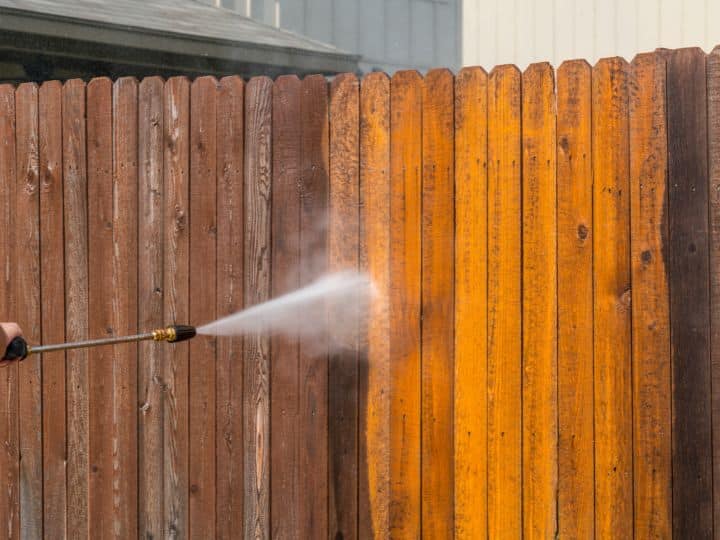
6. Garage Doors, Playsets, and Fencing
Same rules apply. Use low pressure on anything painted or sealed. Don’t stand too close. Rinse gently. Soft washing is the best way to clean them.
Don’t Pressure Wash These
- Windows – You can break the glass, seals, or force water into the frame because of the high pressure. It can cause leaks and long-term damage.
- Roof shingles – We only do soft washing for our roof cleaning. Pressure washing roof shingles can strip away protective granules, shortening the roof’s lifespan and worst can void warranties.
- HVAC units and Electrical panels – We don’t pressure wash them, we just don’t. We cover them up before we do the house washing or pressure washing. HVAC units are expensive and we don’t want any cleaning solutions that can mess them up.
- Fiber cement siding – For any type of house siding, we only do soft washing.
Pressure Washer Safety Stuff
- Wear goggles. Always.
- Brace yourself, use a pressure washer with your two hands.
- Don’t aim the spray at anything living.
- Avoid the zero-degree nozzle unless you’ve read up and practi